What Our SEO Case Studies Actually Teach About Compounding Growth
From a catering company to a beachfront resort to a 9-figure e-commerce brand, the wins look different on the surface. The underlying pattern is always the same.
Different Industries, One Repeating Pattern
Across the client work behind RiseRidge's case studies — catering, hospitality, e-commerce, SaaS, DTC beauty, multi-location retail, and even a restricted-advertising niche — the industries and starting points vary enormously. A beachfront resort with 43 visits in a quarter has almost nothing in common, on paper, with a SaaS platform generating steady revenue but plateaued on organic growth.
What's remarkable isn't how different these engagements look. It's how similar the path to results turns out to be, every time.
Lesson 1: Technical Debt Is Almost Always the First Bottleneck
Nearly every engagement starts with a site health score far below where it needs to be — sites with hundreds or even thousands of unresolved technical issues: missing structured data, generic titles, broken internal links, crawl errors. Content and backlinks can't compensate for a site search engines can't properly crawl and understand.
The fix is rarely glamorous. It's fixing titles and meta descriptions at scale, implementing structured data across every page type, and cleaning up the internal link graph. But it's consistently the highest-leverage first move, because everything downstream — rankings, content performance, local visibility — depends on it.
Lesson 2: Local and Map Visibility Is Underinvested Almost Everywhere
For any business with a physical presence, Google's local map pack is often the most underexploited channel. Complete, well-optimized Google Business Profiles, consistent local signals, and location-specific content routinely move the needle faster than broad organic content plays — because the competition for local intent is thinner than the competition for generic head terms.
Lesson 3: Commercial Terms Move Fastest Once the Foundation Is Fixed
Once the technical foundation is solid, priority commercial keywords — the ones tied directly to revenue — are usually the first to show meaningful movement, often climbing dozens of positions within a single quarter. This is deliberate: we prioritize keyword work by revenue potential, not by search volume alone, so the earliest wins are the ones that matter most to the business.
Lesson 4: Content Depth Beats Content Volume, Every Time
Brands that plateau after early technical wins are almost always under-investing in content depth. The engagements with the strongest compounding results are the ones where technical fixes are paired with genuine topical authority — comprehensive pillar content and cluster pages that fully answer a topic, not scattered posts chasing individual keywords.
Lesson 5: Growth Compounds — It Doesn't Spike and Fade
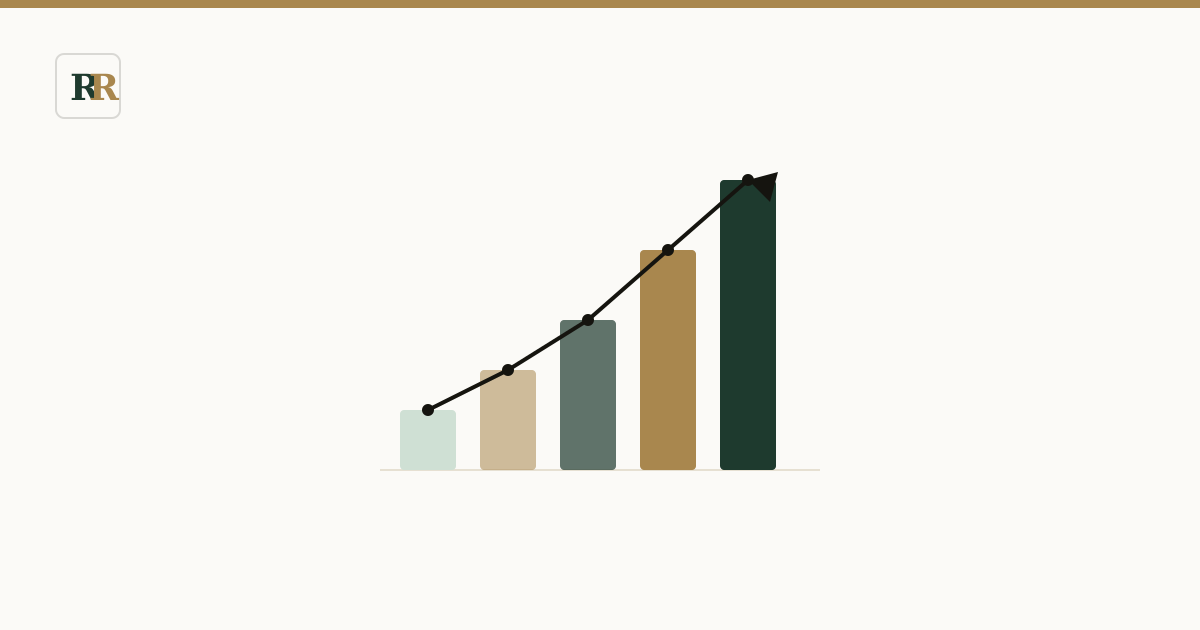
The engagements with the most durable outcomes aren't the ones with the single biggest month. They're the ones where organic sessions, rankings, and revenue kept climbing quarter over quarter, because the underlying system — technical health, content authority, local signals — kept improving rather than being treated as a one-time project.
The Takeaway
Across every case study, the specific numbers differ. The mechanism doesn't: fix the technical foundation first, capture local demand aggressively, prioritize commercial keywords by revenue impact, build genuine topical depth, and treat the whole system as something to keep improving rather than a campaign with an end date.
That's the same mechanism behind RiseRidge's aggregate results across 250+ clients — and it's the one we run on every new engagement, regardless of industry.